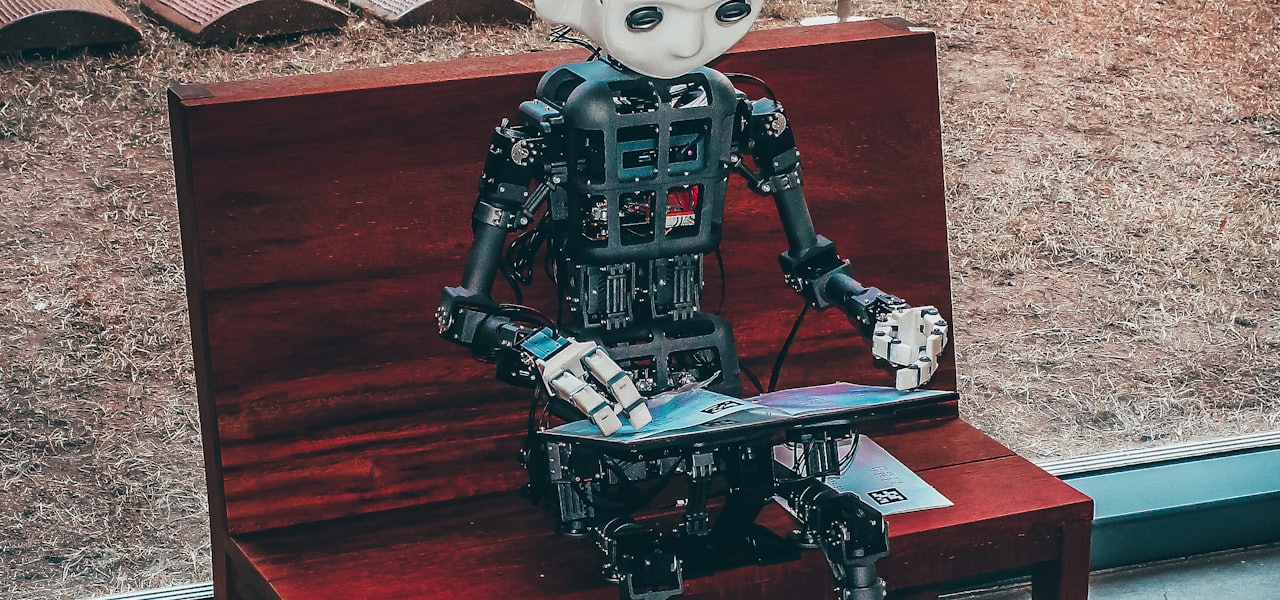
The International Olympiad in Artificial Intelligence (IOAI) is an annual International Science Olympiad in the field of artificial intelligence (AI) for secondary education students under the age of 20. The first IOAI was held in Burgas, Bulgaria, in 2024. Each country or territory may send up to two teams, each consisting of up to four students supported by one leader. Participants are selected through a multi-stage National Olympiad in Artificial Intelligence (NOAI) and/or a Regional Olympiad such as the NAOAI or APOAI. Participants at the IOAI compete on an individual basis. As of 2025, there were 61 countries and territories participating in the IOAI. Three hundred students participated in IOAI 2025. As of 2026, 130 countries and territories are accredited for participation in the IOAI. == Competition Structure == The IOAI consists of three contests: the Individual Contest, the Team Challenge, and the GAITE contest. Medals are awarded based solely on the Individual Contest. === Individual Contest === The Individual Contest is the main competition of the IOAI in which contestants compete individually on separate computers and are not permitted to communicate during the contest. Medals are awarded solely on the basis of the total score from the two-day Individual Contest. The Individual Contest consists of two on-site contest days (six hours per day), preceded by an at-home practice round and an on-site practice session. In IOAI 2025, three at-home problems were released for preparation approximately one month before the on-site contest. Results from this at-home round do not affect final results. The first on-site contest day (Individual Contest 1) comprises three tasks as extensions and continuations of the at-home tasks, while the second day (Individual Contest 2) comprises two or three tasks which are novel and different from the at-home tasks. The Individual Contest tasks span various AI domains such as machine learning, natural language processing, and computer vision. The IOAI 2025 contest rules describe tasks as requiring typical machine-learning workflows, including writing code, fitting models on training data, and running inference on test data, using identical local machines and GPU resources (minimum 24 GB RAM). Tasks, datasets, and submissions are handled through a contest platform (Bohrium), including a web-based Jupyter notebook environment for GPU access. Internet access is restricted to a whitelist of documentation sites and an integrated compact large language model accessible within the platform. The use of external APIs are prohibited unless a task explicitly allows them. In IOAI 2025, each contest task was scored up to 100 points and could include multiple subtasks. Scores are normalized using a baseline solution and a maximum score derived from either a Scientific Committee solution or the best contestant submission. Contestants can view only their own scores during the contest; a live scoreboard may be available publicly outside the contest hall but is not permitted to be viewed by contestants during the contest. For non-English-speaking teams, the IOAI hold a translation session beginning three hours before each contest day in which team leaders review and may amend machine-translated task statements; translations must match the English original and are published after the contest. The IOAI committee also enforces quarantine restrictions during these translation sessions, where neither contestants or team leaders may not use cell phones, laptops, and other communication devices. === Team Challenge === The Team Challenge is a team-based component of the IOAI. The results of this part do not affect the distribution of medals. The IOAI 2025 rules describe it as a “creative and AI-oriented challenge” in which a team's contestants sit together and cooperate, with the format varying by year. In IOAI 2024, teams worked with existing AI image and video generation tools to produce a visual result. In IOAI 2025, teams were assigned to program a robot to complete various tasks. === GAITE Contest === The GAITE (Global AI Talent Empowerment) contest is a simplified version of the individual contest with a separate scoreboard, where participants may ask for hints. It is designed for countries and territories with limited International Science Olympiads history, and it awards alternative prizes instead of medals. == Awards Distribution == The top 50% of the participants in the individual contest receive gold, silver and bronze medals in ratio of 1:2:3, respectively. The top three individuals receive honorary trophies. As in other International Science Olympiads, if an individual is in the top 50% on one of the days, but does not receive a medal, they receive an honorary mention during the awards ceremony. The GAITE contest has similar cutoff logic, but receives a reward instead of a medal. The top three teams in the Team Challenge receive trophies. == National selection and regional competitions == National delegations are selected through country-level qualification processes referred to as National Olympiads in Artificial Intelligence (NOAI) or equivalent, which are widely known for their low success rates. Although the total number of participants worldwide is not published, available data indicate exceptionally competitive national pools; for example, Brazil reports over 716,000 competitors, while Russia reports more than 72,000. In addition, Regional Olympiads (for example, APOAI or NAOAI) provide continent-level competition and preparation platforms in most regions. === National Selection (National Olympiads in Artificial Intelligence) === Participating countries and territories select their students for the IOAI through a National Olympiad in Artificial Intelligence (NOAI) or an equivalent process. The names of these selection processes differ by country, but almost all of them (excluding newer countries participating in the GAITE contest) have in common that the process comprises multiple and/or extremely rigorous selection stages. United States / Canada – The USA–North America AI Olympiad (USAAIO) is a three-round process including an invitational in-person round and a subsequent selection camp, after which a national delegation is selected for IOAI. Russia – The Russian Olympiad in Artificial Intelligence is organized as a multi-stage process (training, qualification, main round, final). Organizers reported 72,316 registrations for the training round and 52,260 registrations for the qualifying round in one season, with tasks spanning mathematics, algorithms/programming, and machine learning; 977 students were disqualified following plagiarism checks. Japan – Japan's national selection consists of multiple stages, beginning with the Japan Olympiad in Artificial Intelligence (JOAI), a large-scale Kaggle-style competition. High-performing participants advance through additional assessment stages, including written solution reports and technical interviews. From this process, eight students are selected for the APOAI team, with four ultimately chosen to represent Japan at the IOAI. Brazil – Brazil's National Olympiad in Artificial Intelligence (ONIA) is conducted as a large competition which consists of progressive rounds of evaluation. It identifies 28 top students from over 716,000 competitors, four of which are selected for the IOAI. The competition is held in four phases across two cycles, including a two-step third phase and a final training-and-evaluation phase that selects a four-student national team. Singapore – Singapore's national Olympiad consists of two rounds: an online preliminary round (300 MCQs in 3 hours) selects the top 150 performers to advance to the final assessment, which includes both theory questions and Python programming tasks. Additional training and selection may follow the finals for top performers. Poland – The Polish AI Olympiad adopts a two-stage structure: an open online first stage (at-home tasks) and a second-stage competitive camp with 30 selected participants competing for a four-person IOAI team. France – The Olympiades Françaises d'Intelligence Artificielle (OFIA), organized by France-IOI, follow a three-stage structure consisting of an open online qualification round, a second selection round, and a multi-day national training camp and final in Paris. Bangladesh – The Bangladesh AI Olympiad (BdAIO) selects competitors in three rounds: the online preliminary round, the national finals, and the team selection camp. In 2025, 406 participants competed in the national finals. Norway – The Norwrgian AI Olympiad (NOKI) is a three-stage selection system; however, unlike other countries, its first two rounds are shared with the Norwegian Informatics Olympiad. The national Olympiad reports 1,180 participants in the first round. Hong Kong – The national Olympiad reported more than 800 preliminary-round entrants, narrowing through multiple rounds to 25 finalists, with a subsequent
Timeline of artificial intelligence risks in global finance
The following article is a broad timeline of the course of events related to artificial intelligence risks in global finance. The AI boom has led to concerns including the existential risk from artificial intelligence, as the uptake on applications of artificial intelligence increases. By late 2025, global finance and artificial intelligence were "deeply intertwined". A June 2025 Menlo Ventures report raised concerns about the sustainability of future revenue and long-term profitability of AI, given the relatively low rate of consumer monetization. == 2017 == 30 NovemberThe New York Times said that new AI reports by McKinsey & Company, the National Bureau of Economic Research, and an AI Index created by university researchers, indicated an early AI boom. The Index built on a project—"The One Hundred Year Study on Artificial Intelligence" launched in 2014. == 2018 == 2018 was a year of incremental AI growth in finance. == 2022 == The release of ChatGPT by OpenAI became the catalyst for an artificial intelligence boom that continues to remake the global economy. According to a European Central Bank report, public interest in AI increased rapidly as evidenced with rising Google searches, AI jobs, models, patents, and innovations since late 2022. At that time Europe led the US in the size of its AI workforce. == 2023 == The regulatory body, the International Monetary Fund (IMF), published their report, "Generative Artificial Intelligence in Finance: Risk Considerations", drawing attention to oversight gaps and the need for regulations. The report explores the risks posed by using generative artificial intelligence (GenAI) systems in the financial sector including "broader risks to financial stability." == 2024 == January 12 In January 2024 Bloomberg's published its list of the "Magnificent Seven" Big Tech companies on the stock market based on their strength, size and market capitalization:Apple, Microsoft, Alphabet (Google), Amazon, Meta Platforms (Facebook), Nvidia, and Tesla. 21 June During the AI boom, Nvidia became the world's most valuable company, surpassing Microsoft, as its value increased to over US$4 trillion. In 2023 and 2024, the "Magnificent Seven" stocks were the primary drivers behind the increase in equity indexes, according to Reuters. == 2025 == === January === 23 January President Donald Trump's AI policy was announced calling for United States global leadership in artificial intelligence. The Economist noted that this politic shift in which the United States seeks "global dominance" in AI includes trimming regulations and assisting in expansion of infrastructure and increase in number of AI workers. Governments of Gulf nations were also investing trillions of dollars in AI. 27 January Against the backdrop of a tech war between China and the United States over AI dominance, within days of the launch of China's free DeepSeek App, it was the most downloaded app in the United States, rising to the first place in the Apple app store. President Trump responded immediately, saying this "sudden rise" should be a "wake-up" call to the United States, and called on US companies to be more competitive. === June === 26 June In their June 2025 report, Menlo Ventures estimated that only about 3% of consumers paid for artificial intelligence-related services, representing about $USD12 billion in annual spending. This is relatively low in contrast to the massive capital expenditure by AI infrastructure companies, which raises concerns about revenue sustainability and long-term profitability. === July === 23 July The Trump administration launched the US AI Action Plan, positioning the United States in a high-stakes technological race with China for global dominance in artificial intelligence, emphasizing that neither nation can afford to fall behind due to the exponential nature of AI advancement. The plan, a new government website and policy speech called for accelerated AI adoption across federal agencies, and a number of initiatives to make is easier for AI infrastructure expansion, and other measures to ensure American leadership in AI standards. Some leading experts warned that the administration failed to provide sufficient regulations and safeguards for AI safety. Concerns were raised about the negative impacts of cuts to research funding and tightened visa policies for scientists, potentially undermining public trust and America's ability to compete internationally. === September === 7 September The Economist cautioned that AI revenues are relatively modest compared to the high cost and investments in the creation of new data centers. Even Sam Altman, OpenAI CEO and one of the leading figures of the AI boom,, raised concerns about investors' outsized hopes for financial returns. At the same time, history has shown that new technologies, like railways and electricity, endured and spread after the initial hype faded. 12 September Economists warn that U.S. households' direct and indirect investments—mutual funds or retirement plans—in the stock market reached an unprecedented historically high level, now representing 45% of all financial assets, or about $USD51.2 trillion. Compared to the Dot-com bubble this represents a sharp increase in exposure. This makes U.S. households vulnerable to market downturns which in turn would result in decreasing consumer spending. U.S. household net worth rose to a record $176.3 trillion in the second quarter, an increase of $7.3 trillion since early 2025 and about $46 trillion higher than before the pandemic. Federal Reserve data attribute the surge primarily to gains in stock markets and housing values. However, the rise in wealth on paper coincided with increased household borrowing and growing government debt. 18 September Questions were being raised about how quickly the data centers, chips, servers, and GPUs assets of major AI companies will depreciate in value. Comparisons have been made to the Railway Mania in the aftermath of the stock market bubble where a valuable physical infrastructure remained standing, and the telecoms crash after the dot-com bubble which left fiber networks. 28 September There were warnings that record-high American stock ownership during the AI-fueled market boom is a red flag for systemic risk, as the current concentration in equities exceeds levels seen before the dot-com bubble burst in 2000, and could amplify the impact of any future stock market correction. === October === 3 October In 2025 alone, venture capitalists invested almost $USD200 billion in the artificial intelligence sector. 29 October Nvidia was the first company in the world to be valued at US$5 trillion, largely due to AI demand and strategic partnerships with leading technology and AI firms. Nvidia's increase in value was "meteoric". === November === 2 November Forbes reported that, since April, the 'Magnificent Seven' tech giants together contributed over 40% of the S&P 500's return, highlighting their outsized influence and the growing impact of AI on market valuations. CNN warned that while there is a current benefit to investors, with such a high concentration in the S&P 500, they are highly exposed to the fate of the Mag Seven. 2 November Globally there are 11,000 datacentres—huge campuses for AI infrastructure, including thousands of chips, GPUS, and servers. This represents a 500% increase over the last two decades. It is anticipated that $3USDtn more will be spent on increasing that number over the next two or three years. 5 November Concerns about the potential for a market bubble were raised as six of the AI-related Big Tech "Magnificent Seven"—that contribute to the AI boom—reported losing ground in the stock market. Global markets and artificial intelligence have become "deeply intertwined", according to a Reuters report. As of November 2025, more than 50% of the 20 largest S&P firms were deeply exposed to AI. In contrast, in 2000, the 20 S&P 500 firms represented 39% of its total value only 11 of these companies were exposed to the internet. If AI fails to deliver strong returns on their investments, these top S&P firms would be significantly impacted, according to the Economist. Analysts suggest that the AI market in 2025 may not behave like a traditional one, as investors are simultaneously aware of the risks and driven by the potential for outsized rewards. Leading AI labs may believe that the first company to achieve artificial general intelligence (AGI), when an AI system surpasses all human cognitive abilities and becomes capable of self-improvement—could dominate the future of technology and finance. While some have estimated that the potential value of such a breakthrough could be as high as $1.46 quadrillion, this figure is speculative and widely debated. 5 November Bloomberg described Nvidia's H100 Hopper-Blackwell AI chips as the "King of AI chips". Nvidia dominates the AI chip market with over 78% of the market share because of both speed and cost. According to B
Semi-Automatic Ground Environment
The Semi-Automated Ground Environment (SAGE) was a system of large computers and associated networking equipment that coordinated data from many radar sites and processed it to produce a single unified image of the airspace over a wide area. SAGE directed and controlled the NORAD response to a possible Soviet air attack, operating in this role from the late 1950s into the 1980s. The processing power behind SAGE was supplied by the largest discrete component-based computer ever built, the AN/FSQ-7, manufactured by IBM. Each SAGE Direction Center (DC) housed an FSQ-7 which occupied an entire floor, approximately 22,000 square feet (2,000 m2) not including supporting equipment. The FSQ-7 was actually two computers, "A" side and "B" side. Computer processing was switched from "A" side to "B" side on a regular basis, allowing maintenance on the unused side. Information was fed to the DCs from a network of radar stations as well as readiness information from various defense sites. The computers, based on the raw radar data, developed "tracks" for the reported targets, and automatically calculated which defenses were within range. Operators used light guns to select targets on-screen for further information, select one of the available defenses, and issue commands to attack. These commands would then be automatically sent to the defense site via teleprinter. Connecting the various sites was an enormous network of telephones, modems and teleprinters. Later additions to the system allowed SAGE's tracking data to be sent directly to CIM-10 Bomarc missiles and some of the US Air Force's interceptor aircraft in-flight, directly updating their autopilots to maintain an intercept course without operator intervention. Each DC also forwarded data to a Combat Center (CC) for "supervision of the several sectors within the division" ("each combat center [had] the capability to coordinate defense for the whole nation"). SAGE became operational in the late 1950s and early 1960s at an estimated total cost between 8 and 12 billion dollars, four times the cost of the Manhattan Project. Throughout its development, there were continual concerns about its real ability to deal with large attacks, and the Operation Sky Shield tests showed that only about one-fourth of enemy bombers would have been intercepted. Nevertheless, SAGE was the backbone of NORAD's air defense system into the 1980s, by which time the tube-based FSQ-7s were increasingly costly to maintain and completely outdated. Today the same command and control task is carried out by microcomputers, based on the same basic underlying data. == Background == === Earlier systems === Just prior to World War II, Royal Air Force (RAF) tests with the new Chain Home (CH) radars had demonstrated that relaying information to the fighter aircraft directly from the radar sites was not feasible. The radars determined the map coordinates of the enemy, but could generally not see the fighters at the same time. This meant the fighters had to be able to determine where to fly to perform an interception but were often unaware of their own exact location and unable to calculate an interception while also flying their aircraft. The solution was to send all of the radar information to a central control station where operators collated the reports into single tracks, and then reported these tracks to the airbases, or sectors. The sectors used additional systems to track their own aircraft, plotting both on a single large map. Operators viewing the map could then see what direction their fighters would have to fly to approach their targets and relay that simply by telling them to fly along a certain heading or vector. This Dowding system was the first ground-controlled interception (GCI) system of large scale, covering the entirety of the UK. It proved enormously successful during the Battle of Britain, and is credited as being a key part of the RAF's success. The system was slow, often providing information that was up to five minutes out of date. Against propeller driven bombers flying at perhaps 225 miles per hour (362 km/h) this was not a serious concern, but it was clear the system would be of little use against jet-powered bombers flying at perhaps 600 miles per hour (970 km/h). The system was extremely expensive in manpower terms, requiring hundreds of telephone operators, plotters and trackers in addition to the radar operators. This was a serious drain on manpower, making it difficult to expand the network. The idea of using a computer to handle the task of taking reports and developing tracks had been explored beginning late in the war. By 1944, analog computers had been installed at the CH stations to automatically convert radar readings into map locations, eliminating two people. Meanwhile, the Royal Navy began experimenting with the Comprehensive Display System (CDS), another analog computer that took X and Y locations from a map and automatically generated tracks from repeated inputs. Similar systems began development with the Royal Canadian Navy, DATAR, and the US Navy, the Naval Tactical Data System (NTDS). A similar system was also specified for the Nike SAM project, specifically referring to a US version of CDS, coordinating the defense over a battle area so that multiple batteries did not fire on a single target. All of these systems were relatively small in geographic scale, generally tracking within a city-sized area. === Valley Committee === When the Soviet Union tested its first atomic bomb in August 1949, the topic of air defense of the US became important for the first time. A study group, the "Air Defense Systems Engineering Committee", was set up under the direction of Dr. George Valley to consider the problem and is known to history as the "Valley Committee". Their December report noted a key problem in air defense using ground-based radars. A bomber approaching a radar station would detect the signals from the radar long before the reflection off the bomber was strong enough to be detected by the station. The committee suggested that when this occurred, the bomber would descend to low altitude, thereby greatly limiting the radar horizon, allowing the bomber to fly past the station undetected. Although flying at low altitude greatly increased fuel consumption, the team calculated that the bomber would only need to do this for about 10% of its flight, making the fuel penalty acceptable. The only solution to this problem was to build a huge number of stations with overlapping coverage. At that point the problem became one of managing the information. Manual plotting was ruled out as too slow, and a computerized solution was the only possibility. To handle this task, the computer would need to be fed information directly, eliminating any manual translation by phone operators, and it would have to be able to analyze that information and automatically develop tracks. A system tasked with defending cities against the predicted future Soviet bomber fleet would have to be dramatically more powerful than the models used in the NTDS or DATAR. The Committee then had to consider whether or not such a computer was possible. The Valley Committee was introduced to Jerome Wiesner, associate director of the Research Laboratory of Electronics at MIT. Wiesner noted that the Servomechanisms Laboratory had already begun development of a machine that might be fast enough. This was the Whirlwind I, originally developed for the Office of Naval Research as a general purpose flight simulator that could simulate any current or future aircraft by changing its software. Wiesner introduced the Valley Committee to Whirlwind's project lead, Jay Forrester, who convinced him that Whirlwind was sufficiently capable. In September 1950, an early microwave early-warning radar system at Hanscom Field was connected to Whirlwind using a custom interface developed by Forrester's team. An aircraft was flown past the site, and the system digitized the radar information and successfully sent it to Whirlwind. With this demonstration, the technical concept was proven. Forrester was invited to join the committee. === Project Charles === With this successful demonstration, Louis Ridenour, chief scientist of the Air Force, wrote a memo stating "It is now apparent that the experimental work necessary to develop, test, and evaluate the systems proposals made by ADSEC will require a substantial amount of laboratory and field effort." Ridenour approached MIT President James Killian with the aim of beginning a development lab similar to the war-era Radiation Laboratory that made enormous progress in radar technology. Killian was initially uninterested, desiring to return the school to its peacetime civilian charter. Ridenour eventually convinced Killian the idea was sound by describing the way the lab would lead to the development of a local electronics industry based on the needs of the lab and the students who would leave the lab to start their
Information security
Information security is the practice of protecting information by mitigating information risks. It is part of information risk management. It typically involves preventing or reducing the probability of unauthorized or inappropriate access to data or the unlawful use, disclosure, disruption, deletion, corruption, modification, inspection, recording, or devaluation of information. It also involves actions intended to reduce the adverse impacts of such incidents. Protected information may take any form, e.g., electronic or physical, tangible (e.g., paperwork), or intangible (e.g., knowledge). Information security's primary focus is the balanced protection of data confidentiality, integrity, and availability (known as the CIA triad, unrelated to the US government organization) while maintaining a focus on efficient policy implementation, all without hampering organization productivity. This is largely achieved through a structured risk management process. To standardize this discipline, academics and professionals collaborate to offer guidance, policies, and industry standards on passwords, antivirus software, firewalls, encryption software, legal liability, security awareness and training, and so forth. This standardization may be further driven by a wide variety of laws and regulations that affect how data is accessed, processed, stored, transferred, and destroyed. While paper-based business operations are still prevalent, requiring their own set of information security practices, enterprise digital initiatives are increasingly being emphasized, with information assurance now typically being dealt with by information technology (IT) security specialists. These specialists apply information security to technology (most often some form of computer system). IT security specialists are almost always found in any major enterprise/establishment due to the nature and value of the data within larger businesses. They are responsible for keeping all of the technology within the company secure from malicious attacks that often attempt to acquire critical private information or gain control of the internal systems. There are many specialist roles in Information Security including securing networks and allied infrastructure, securing applications and databases, security testing, information systems auditing, business continuity planning, electronic record discovery, and digital forensics. == Standards == Information security standards are guidelines generally outlined in published materials that aim to protect a user's or an organization's cyber environment from threats. This environment includes the users themselves, hardware such as devices and networks, software such as applications or services, and any information in storage or transit. These standards comprise security concepts, technologies, and guidelines to deal with an adverse event. They may also include assessment criteria and certification for organizations implementing a minimum level of security. These standards are developed by various international and national bodies to prevent or mitigate cyber-attacks, ensure consistency among developers, and establish a minimum standard in industries susceptible to an attack. The ISO/IEC 27000 family, published by the International Organization for Standardization (ISO) and the International Electrotechnical Commission (IEC), provides information about the guidelines and requirements for an Information Security Management System (ISMS). The Common Criteria (ISO/IEC 15408) provides guidelines on evaluating and certifying the security of a system. The IEC 62443 establishes security standards for automation and control systems. Similarly, the ISO/SAE 21434, ETSI EN 303 645, and EN 18031 provide standards for road vehicles, the Internet of Things, and radio-based systems respectively. The NIST Cybersecurity Framework (NIST CSF) is a set of guidelines developed by the U.S. National Institute of Standards and Technology to help organizations with risk management. NIST also publishes various Federal Information Processing Standards (FIPS) and Special Publications. The United Kingdom has introduced Cyber Essentials, which is a certification scheme to protect organizations against common security threats. The Australian Cyber Security Centre publishes the Essential Eight mitigation strategies. The Payment Card Industry Data Security Standard (PCI DSS) regulates handling of cardholder data in order to reduce credit card fraud. UL has published standards related to specific industries such as UL 2900-2-3 for security and life safety signaling systems and UL-2900-2-1 for healthcare and wellness systems. == Threats == Information security threats come in many different forms. Some of the most common threats today are software attacks, theft of intellectual property, theft of identity, theft of equipment or information, sabotage, and information extortion. Viruses, worms, phishing attacks, and Trojan horses are a few common examples of software attacks. The theft of intellectual property has also been an extensive issue for many businesses. Identity theft is the attempt to act as someone else usually to obtain that person's personal information or to take advantage of their access to vital information through social engineering. Sabotage usually consists of the destruction of an organization's website in an attempt to cause loss of confidence on the part of its customers. Information extortion consists of theft of a company's property or information as an attempt to receive a payment in exchange for returning the information or property back to its owner, as with ransomware. One of the most functional precautions against these attacks is to conduct periodical user awareness. Governments, military, corporations, financial institutions, hospitals, non-profit organizations, and private businesses amass a great deal of confidential information about their employees, customers, products, research, and financial status. Should confidential information about a business's customers or finances or new product line fall into the hands of a competitor or hacker, a business and its customers could suffer widespread, irreparable financial loss, as well as damage to the company's reputation. From a business perspective, information security must be balanced against cost; the Gordon-Loeb Model provides a mathematical economic approach for addressing this concern. For the individual, information security has a significant effect on privacy, which is viewed very differently in various cultures. == History == Since the early days of communication, diplomats and military commanders understood that it was necessary to provide some mechanism to protect the confidentiality of correspondence and to have some means of detecting tampering. Julius Caesar is credited with the invention of the Caesar cipher c. 50 B.C., which was created in order to prevent his secret messages from being read should a message fall into the wrong hands. However, for the most part protection was achieved through the application of procedural handling controls. Sensitive information was marked up to indicate that it should be protected and transported by trusted persons, guarded and stored in a secure environment or strong box. As postal services expanded, governments created official organizations to intercept, decipher, read, and reseal letters (e.g., the U.K.'s Secret Office, founded in 1653). In the mid-nineteenth century more complex classification systems were developed to allow governments to manage their information according to the degree of sensitivity. For example, the British Government codified this, to some extent, with the publication of the Official Secrets Act in 1889. Section 1 of the law concerned espionage and unlawful disclosures of information, while Section 2 dealt with breaches of official trust. A public interest defense was soon added to defend disclosures in the interest of the state. A similar law was passed in India in 1889, The Indian Official Secrets Act, which was associated with the British colonial era and used to crack down on newspapers that opposed the Raj's policies. A newer version was passed in 1923 that extended to all matters of confidential or secret information for governance. By the time of the First World War, multi-tier classification systems were used to communicate information to and from various fronts, which encouraged greater use of code making and breaking sections in diplomatic and military headquarters. Encoding became more sophisticated between the wars as machines were employed to scramble and unscramble information. The establishment of computer security inaugurated the history of information security. The need for such appeared during World War II. The volume of information shared by the Allied countries during the Second World War necessitated formal alignment of classification systems and procedural controls. An arcane range of markings evol
Verifiable secret sharing
In cryptography, a secret sharing scheme is verifiable if auxiliary information is included that allows players to verify their shares as consistent. More formally, verifiable secret sharing ensures that even if the dealer is malicious there is a well-defined secret that the players can later reconstruct. (In standard secret sharing, the dealer is assumed to be honest.) The concept of verifiable secret sharing (VSS) was first introduced in 1985 by Benny Chor, Shafi Goldwasser, Silvio Micali and Baruch Awerbuch. In a VSS protocol a distinguished player who wants to share the secret is referred to as the dealer. The protocol consists of two phases: a sharing phase and a reconstruction phase. Sharing: Initially the dealer holds secret as input and each player holds an independent random input. The sharing phase may consist of several rounds. At each round each player can privately send messages to other players and can also broadcast a message. Each message sent or broadcast by a player is determined by its input, its random input and messages received from other players in previous rounds. Reconstruction: In this phase each player provides its entire view from the sharing phase and a reconstruction function is applied and is taken as the protocol's output. An alternative definition given by Oded Goldreich defines VSS as a secure multi-party protocol for computing the randomized functionality corresponding to some (non-verifiable) secret sharing scheme. This definition is stronger than that of the other definitions and is very convenient to use in the context of general secure multi-party computation. Verifiable secret sharing is important for secure multiparty computation. Multiparty computation is typically accomplished by making secret shares of the inputs, and manipulating the shares to compute some function. To handle "active" adversaries (that is, adversaries that corrupt nodes and then make them deviate from the protocol), the secret sharing scheme needs to be verifiable to prevent the deviating nodes from throwing off the protocol. == Feldman's scheme == A commonly used example of a simple VSS scheme is the protocol by Paul Feldman, which is based on Shamir's secret sharing scheme combined with any encryption scheme which satisfies a specific homomorphic property (that is not necessarily satisfied by all homomorphic encryption schemes). The following description gives the general idea, but is not secure as written. (Note, in particular, that the published value gs leaks information about the dealer's secret s.) First, a cyclic group G of prime order q, along with a generator g of G, is chosen publicly as a system parameter. The group G must be chosen such that computing discrete logarithms is hard in this group. (Typically, one takes an order-q subgroup of (Z/pZ)×, where q is a prime dividing p − 1.) The dealer then computes (and keeps secret) a random polynomial P of degree t with coefficients in Zq, such that P(0) = s, where s is the secret. Each of the n share holders will receive a value P(1), ..., P(n) modulo q. Any t + 1 share holders can recover the secret s by using polynomial interpolation modulo q, but any set of at most t share holders cannot. (In fact, at this point any set of at most t share holders has no information about s.) So far, this is exactly Shamir's scheme. To make these shares verifiable, the dealer distributes commitments to the coefficients of P modulo q. If P(x) = s + a1x + ... + atxt, then the commitments that must be given are: c0 = gs, c1 = ga1, ... ct = gat. Once these are given, any party can verify their share. For instance, to verify that v = P(i) modulo q, party i can check that g v = c 0 c 1 i c 2 i 2 ⋯ c t i t = ∏ j = 0 t c j i j = ∏ j = 0 t g a j i j = g ∑ j = 0 t a j i j = g P ( i ) {\displaystyle g^{v}=c_{0}c_{1}^{i}c_{2}^{i^{2}}\cdots c_{t}^{i^{t}}=\prod _{j=0}^{t}c_{j}^{i^{j}}=\prod _{j=0}^{t}g^{a_{j}i^{j}}=g^{\sum _{j=0}^{t}a_{j}i^{j}}=g^{P(i)}} . This scheme is, at best, secure against computationally bounded adversaries, namely the intractability of computing discrete logarithms. Pedersen proposed later a scheme where no information about the secret is revealed even with a dealer with unlimited computing power. == Baghery's hash-based scheme == A recent line of research has proposed a unified framework, for building practical VSS schemes that do not necessarily require homomorphic commitments —a key requirement in traditional constructions such as Feldman's and Pedersen's schemes. The framework allows instantiations with different commitment schemes, including post-quantum secure options such as hash-based commitments. This offers a flexible and efficient approach to build VSS schemes, in which the verifiability of shares is decoupled from the need for homomorphic commitments, which are often tied to assumptions like the Discrete Logarithm (DL) problem, known to be insecure against quantum adversaries. One instantiation of the new framework uses hash-based commitments and a random oracle to construct a hash-based VSS scheme based on Shamir's secret sharing. === Protocol Overview === Sharing Phase: Given a secure hash-based commitment scheme C {\displaystyle {\mathcal {C}}} and a hash function H {\displaystyle {\mathcal {H}}} (modeled as a random oracle), to share a secret value s {\displaystyle s} among n {\displaystyle n} parties with threshold t {\displaystyle t} , the dealer acts as follows: Following Shamir sharing, the dealer samples a random degree- t {\displaystyle t} polynomial P ( X ) {\displaystyle P(X)} over a filed or ring, with P ( 0 ) = s {\displaystyle P(0)=s} . Each of the n {\displaystyle n} parties will receive a value v i = P ( i ) {\displaystyle v_{i}=P(i)} modulo q {\displaystyle q} as a share. To prove the validity of the shares, the dealer acts as follows: Samples another random degree- t {\displaystyle t} polynomial R ( X ) {\displaystyle R(X)} and n {\displaystyle n} random values γ 1 , … , γ n {\displaystyle \gamma _{1},\dots ,\gamma _{n}} from the same filed or ring. Computes a set of commitments c i = C ( P ( i ) , R ( i ) , γ i ) {\displaystyle c_{i}={\mathcal {C}}(P(i),R(i),\gamma _{i})} for i = 1 , 2 , … , n {\displaystyle i=1,2,\dots ,n} . Note that, the additional randomness γ i {\displaystyle \gamma _{i}} is used when the secret s {\displaystyle s} does not have sufficient entropy, but it can be omitted when sharing a uniformly random secret. Each of the n {\displaystyle n} parties will also receive a value γ i {\displaystyle \gamma _{i}} modulo q {\displaystyle q} as a share. Calculates a challenge value d {\displaystyle d} via a hash function d = H ( c 1 , … , c n ) {\displaystyle d={\mathcal {H}}(c_{1},\dots ,c_{n})} and then computes a polynomial Z ( X ) = R ( X ) + d ⋅ P ( X ) {\displaystyle Z(X)=R(X)+d\cdot P(X)} . Broadcasts the commitments c 1 , … , c n {\displaystyle c_{1},\dots ,c_{n}} along with Z ( X ) {\displaystyle Z(X)} as the proof and privately sends ( v i , γ i ) {\displaystyle (v_{i},\gamma _{i})} as the individual share to party i {\displaystyle i} . Verification Phase: Given an individual share ( v i , γ i ) {\displaystyle (v_{i},\gamma _{i})} and a proof ( c 1 , … , c n , Z ( X ) ) {\displaystyle (c_{1},\dots ,c_{n},Z(X))} , party i {\displaystyle i} verifies the correctness of it as below: Checks that Z ( X ) {\displaystyle Z(X)} is a valid (up to) degree- t {\displaystyle t} polynomial. Recomputes the challenge value d = H ( c 1 , … , c n ) {\displaystyle d={\mathcal {H}}(c_{1},\dots ,c_{n})} , and verifies the commitment equation c i = C ( v i , Z ( i ) − d v i , γ i ) {\displaystyle c_{i}={\mathcal {C}}(v_{i},Z(i)-dv_{i},\gamma _{i})} . If the verification fails, similar to Feldman’s and Pedersen’s schemes, the party raises a complaint. If too many complaints (more than t {\displaystyle t} ) are raised, the dealer is disqualified. In case of a complaint, the dealer can publicly reveal the disputed share to allow global verification. Honest parties can then collectively agree to either continue or disqualify the dealer. This scheme supports the sharing of both low-entropy and high-entropy secrets. Moreover, since it relies solely on secure hash functions for commitments and on a (quantum) random oracle, it plausibly achieves security even against quantum adversaries. Additionally, by using only lightweight cryptographic primitives, the scheme is considerably more efficient in practice compared to traditional VSS constructions based on number-theoretic assumptions. == Benaloh's scheme == Once n shares are distributed to their holders, each holder should be able to verify that all shares are collectively t-consistent (i.e., any subset t of n shares will yield the same, correct, polynomial without exposing the secret). In Shamir's secret sharing scheme the shares s 1 , s 2 , . . . , s n {\displaystyle s_{1},s_{2},...,s_{n}} are t-consistent if and only if the interpolation of the points ( 1 , s 1 ) , ( 2 , s 2 ) , . . . , (
Human-centered AI
Human-centered AI is the initiative at the intersection of the fields of artificial intelligence (AI) and human-computer interaction (HCI) to develop AI systems in a way that prioritizes human values, needs, and general flourishing. Emphasis is placed on the recognition that artificial intelligence systems are rapidly changing, and will continue to influence, many aspects of the human experience, in areas ranging from scientific inquiry, governance and policy, labor and the economy, and creative expression, with an aim set to adapt current developments and guide future developments on a trajectory which is most beneficial to the human population at large, with the goal of augmenting human intelligence and capacities across these areas, as opposed to replacing them. Particular attention is paid to mitigating negative effects of AI automation on the livelihoods of the labor force, the use of AI in healthcare fields, and imbuing AI systems with societal values. Human-centered AI is linked to related endeavors in AI alignment and AI safety, but while these fields primarily focus on mitigating risks posed by AI that is unaligned to human values and/or uncontrollable AI self-development, human-centered AI places significant focus in exploring how AI systems can augment human capacities and serve as collaborators. == Conceptual history == The importance of the alignment of artificial intelligence development towards human values in some sense predates artificial intelligence itself, as before the modern conception of artificial intelligence as coined at the 1956 Dartmouth Workshop, the conception of robots as constructed, autonomous agents entered the cultural consciousness as early as the 1920s, with Karel Capek's Rossum's Universal Robots. The imagined issues relating to robots' aims and values requiring intentional alignment and direction with those of humans followed soon after, most widely known from science fiction author Isaac Asimov’s Three Laws of Robotics, dating to his 1942 short story “Runaround”. Two of the three eponymous laws are directly concerned with robots’ interaction with and positioned deference towards humans, and have in recent times been reexamined in the face of modern AI. In 1985, after artificial intelligence research had taken off and its effects were more acutely conceptualized, Asimov added a Rule Zero, treating robots' relationship with humanity as a whole, distinct from individual humans. While modern artificial intelligence is largely distinct from robotics, the conceptualization of both robots and AI systems as autonomous agents positions this as a foundation for conceptions of human-centered AI. Aside from robots, artificially intelligent autonomous agents in interaction with humans have been conceived of for at least 75 years. In 1950, Alan Turing published his famous "Imitation Game", often also called the Turing Test, a thought experiment that uses human-machine interaction as an assessor for the intelligence of a system. In recent times, artificial intelligence researchers such as Stanford's Erik Brynjolfsson have conceived of rapid AI development leading to a so-called "Turing Trap". == Augmentation and automation == A major stated aim of human-centered AI is to promote the development of AI in ways that augment human capabilities, rather than replacing them. To this end, organizations and initiatives that take a human-centered approach to AI development focus on frameworks that encourage collaboration between humans and artificial intelligence systems to build towards even greater progress, rather than attempting to automate tasks currently handled by humans. Such avenues include everything from data visualization for big data, allowing human engineers to better understand extremely large datasets, allowing for the design of better machine learning models to handle them, to AI-powered sensors to monitor vitals, allowing for better responsiveness from healthcare providers. Many human-centered AI initiatives often position it as a better alternative to the apparent mainstream in AI development, which is primarily concerned with automation. Driven by the pressures of the market economy, AI development that does replace tasks currently performed by humans with automated processes is incentivized, as it allows for greater profit margins; this often comes at the detriment of the human whose performance is replaced, thus leading to an environment wherein human workers are outcompeted by AI systems across various service-sector and technology-based industries. At the same time, automation and augmentation are not always incompatible; a major aim of human-centered AI is towards the automation of rote tasks that would otherwise hinder a human’s productivity or creativity, freeing them to direct their energy and intelligence towards higher-level tasks, thus achieving augmentation through automation. Empirical research in pharmaceutical sales has shown that a human-centered implementation - where work procedures, training, and incentives are designed around individuals' cognitive needs - improves augmentation performance, while implementation without such adaptation can worsen outcomes relative to a legacy system. == Research == Much of the work done on human-centered AI comes from research institutes, within universities, companies, and as freestanding organizations. The Stanford Institute for Human-Centered AI (abbreviated to HAI) is one such group, engaging academics, industry professionals, and policymakers centered in Stanford University to conduct research and inform policy in various areas in human-centered AI, including on aspects of the intelligence itself, augmentation, and on measuring the impacts of AI systems on sociopolitcal and cultural institutions. Similar groups exist at other universities, including the Chicago Human + AI (CHAI) Lab at the University of Chicago, the HCAI@GU group at the University of Gothenburg, and the Human-Centered AI (HAI) Lab at the University of Oxford. Outside of the academy, companies such as IBM have research initiatives dedicated to advancements in human-centered AI. At Kenyon College, the Integrated Program for Humane Studies (IPHS) launched a human-centered AI program in 2016 integrating artificial intelligence research with humanities and social science inquiry. This approach treats computation and humanistic scholarship as a single unified field of research rather than as separate disciplines requiring collaboration. The program's researchers have published in both AI venues (such as the International Conference on Machine Learning and Frontiers of Computer Science) and humanities journals (such as PMLA and Poetics Today), and the lab was selected in December 2025 by Schmidt Sciences for its Humanities and AI Virtual Institute to apply AI methods to cultural heritage preservation.
Virtual collective consciousness
Virtual collective consciousness (VCC) is a term rebooted and promoted by two behavioral scientists, Yousri Marzouki and Olivier Oullier in their 2012 Huffington Post article titled: "Revolutionizing Revolutions: Virtual Collective Consciousness and the Arab Spring", after its first appearance in 1999-2000. VCC is now defined as an internal knowledge catalyzed by social media platforms and shared by a plurality of individuals driven by the spontaneity, the homogeneity, and the synchronicity of their online actions. VCC occurs when a large group of persons, brought together by a social media platform think and act with one mind and share collective emotions. Thus, they are able to coordinate their efforts efficiently, and could rapidly spread their word to a worldwide audience. When interviewed about the concept of VCC that appeared in the book - Hyperconnectivity and the Future of Internet Communication - he edited, Professor of Pervasive Computing, Adrian David Cheok mentioned the following: "The idea of a global (collective) virtual consciousness is a bottom-up process and a rather emergent property resulting from a momentum of complex interactions taking place in social networks. This kind of collective behaviour (or intelligence) results from a collision between a physical world and a virtual world and can have a real impact in our life by driving collective action." == Etymology == In 1999-2000, Richard Glen Boire provided a cursory mention and the only occurrence of the term "Virtual collective consciousness" in his text as follows: The trend of technology is to overcome the limitations of the human body. And, the Web has been characterized as a virtual collective consciousness and unconsciousness The recent definition of VCC evolved from the first empirical study that provided a cyberpsychological insight into the contribution of Facebook to the 2011 Tunisian revolution. In this study, the concept was originally called "collective cyberconsciousness". The latter is an extension of the idea of "collective consciousness" coupled with "citizen media" usage. The authors of this study also made a parallel between this original definition of VCC and other comparable concepts such as Durkheim's collective representation, Žižek's "collective mind" or Boguta's "new collective consciousness" that he used to describe the computational history of the Internet shutdown during the Egyptian revolution. Since VCC is the byproduct of the network's successful actions, then these actions must be timely, acute, rapid, domain-specific, and purpose-oriented to successfully achieve their goal. Before reaching a momentum of complexity, each collective behavior starts by a spark that triggers a chain of events leading to a crystallized stance of a tremendous amount of interactions. Thus, VCC is an emergent global pattern from these individual actions. In 2012, the term virtual collective consciousness resurfaced and was brought to light after extending its applications to the Egyptian case and the whole social networking major impact on the success of the so-called Arab Spring. Moreover, the acronym VCC was suggested to identify the theoretical framework covering on-line behaviors leading to a virtual collective consciousness. Hence, online social networks have provided a new and faster way of establishing or modifying "collective consciousness" that was paramount to the 2011 uprisings in the Arab world. == Theoretical underpinnings of VCC == Various theoretical references in fields ranging from sociology to computer science were mentioned in order to account for the key features that render the framework for a virtual collective consciousness. The following list is not exhaustive, but the references it contains are often highlighted: Émile Durkheim's collective representations are at the heart of VCC since collectivity taken decisions according to Durkheim's assumptions will approve or disapprove individuals' actions and help them eventually reach their final goal. Marshall McLuhan's global village: The shrinking of our big world to a small place called cyberspace is made possible by technological extensions of human consciousness. Carl Jung's collective unconscious: When a society witnesses significant changes, the anchoring of archetypal images (e.g., political leaders) seems to be deeply rooted in individuals' collective unconscious that is likely to bias their political choices. Individual memories of public events were also supposed to convey a "collective awareness" that can be subconsciously altered by the instantaneous spread of information through social networking around the world. Daniel Wegner's transactive memory (TM): social-networking platforms such as Facebook during the Tunisian revolution or Twitter during the Egyptian revolution served as placeholders of a VCC where information can be harnessed and steered to the highly specific revolutionary purpose. Although research on TM was originally limited to couples, small groups, and organizations, recent studies strongly suggest that an effective TM can operate on a very large scale too. James Surowiecki's wisdom of crowds Collective influence algorithm: The CI (Collective influence) algorithm is effective in finding influential nodes in a variety of networks, including social networks, communication networks, and biological networks. It has been used to identify influencers on social-media platforms, to identify key nodes in transportation networks, and to identify potential drug-targets in biological networks. == Some illustrations of VCC == Besides the studied effect of social networking on the Tunisian and Egyptian revolutions, the former via Facebook and the latter via Twitter other applications were studied under the prism of VCC framework: The Whitacre's virtual choir: A compelling example of the degree of autonomy and self-identity members of a spontaneously created network through a VCC is Eric Whitacre's unique musical project that involved a collection of singers performing remotely to create a virtual Choir. The effect of all the voices illustrated a genuine virtual collective empathy merging the artist's mind with all the singers through his silent conducting gestures. The Harlem Shake dance: The Bitcoin protocol: It was questioned whether or not the Bitcoin protocol can morph into virtual collective consciousness. The Byzantine generals problem was used as an analogy to understand the behavioral complexity of the community of Bitcoin's users. Artificial Social Networking Intelligence (ASNI): refers to the application of artificial intelligence within social networking services and social media platforms. It encompasses various technologies and techniques used to automate, personalize, enhance, improve, and synchronize users' interactions and experiences within social networks. ASNI is expected to evolve rapidly, influencing how we interact online and shaping our digital experiences. Transparency, ethical considerations, media influence bias, and user control over data will be crucial to ensure responsible development and positive impact.